Can Flexible Stone Veneer Bend Around Curved Walls and Columns?

Curved walls, rounded columns, arches, and other flowing architectural details can be difficult to finish with traditional stone.

Traditional stone slabs are rigid, and tile often requires multiple pieces, cuts, and joints to follow a curve.

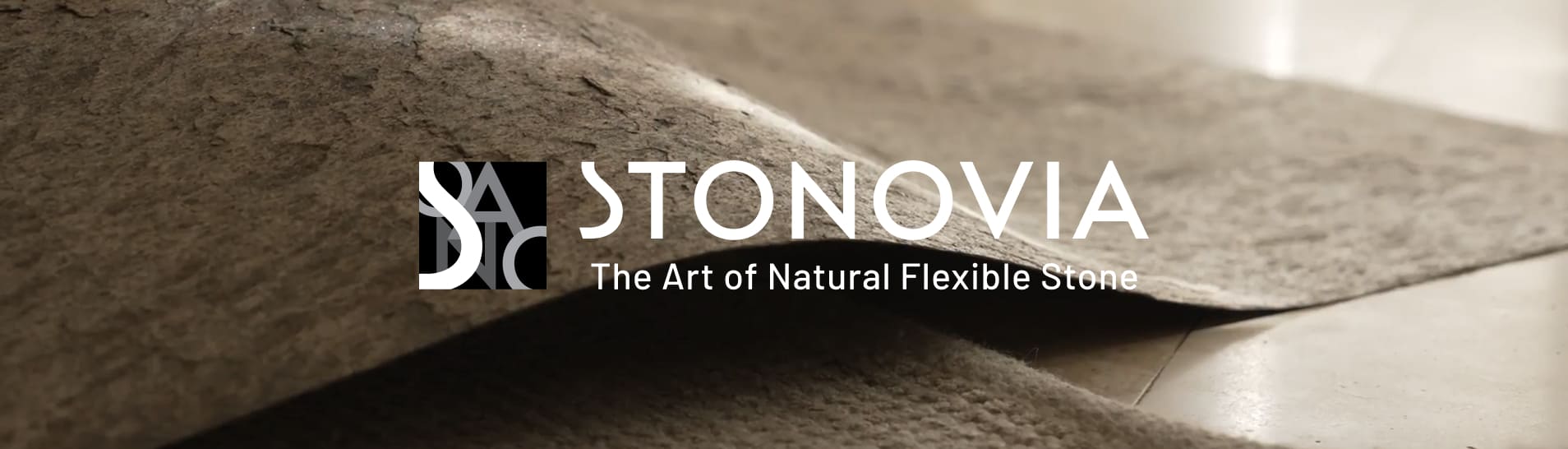
STONOVIA Flexible Stone Veneer takes a different approach. It combines a thin layer of genuine natural stone with a flexible composite backing, allowing the veneer to bend smoothly around suitable curved surfaces while keeping the natural stone texture and character visible.

That makes curved applications one of the areas where flexible stone veneer offers a clear advantage.

Yes, Flexible Stone Veneer Can Bend Around Curves

STONOVIA Flexible Stone Veneer can be used on suitable curved surfaces such as:

  • Rounded columns
  • Curved feature walls
  • Radius walls
  • Arches and archways
  • Rounded architectural details
  • Smooth curved corners and transitions

Instead of cutting rigid stone into many small sections to approximate a curve, flexible veneer can follow many curved surfaces as a more continuous sheet.

This creates a cleaner, more natural stone appearance with fewer interruptions to the pattern and texture.

Bendable, Not Foldable

This is the most important distinction.

Flexible stone veneer can bend, but it should not be sharply folded or creased.

Although the natural stone layer on the surface is very thin, it is still genuine natural stone, so this surface layer retains some natural brittleness. The flexibility comes from the

combination of the thin stone layer and flexible backing, not because the natural stone itself has become soft or rubber-like.

For example:

  • Smooth curve: ✓ Suitable
  • Gradual radius: ✓ Suitable
  • Rounded column: ✓ Suitable
  • Mild compound curve: △ May be possible with smaller sections and carefully planned seams
  • Sphere or pronounced double-curved surface: ✕ Not suitable as one continuous sheet
  • Sharp crease: ✕ Not suitable
  • Flat 180-degree fold: ✕ Not suitable

Forcing the veneer into a sharp fold can crack the natural stone surface layer or damage the backing.

A simple way to think about it is:

Flexible stone veneer is bendable, not foldable.

Minimum Bending Radius: Approximately 8 Inches

STONOVIA Flexible Stone Veneer is designed for curved surfaces with a minimum bending radius of approximately 8 inches (20 cm).

That makes it suitable for many rounded columns, radius walls, arches, and gradually curved architectural surfaces.

The veneer should not be forced below its specified minimum radius. Bending it too tightly can place excessive stress on the natural stone surface layer and may cause cracking.

For tighter curves, always confirm the radius before cutting or installing the material.

Single Curves vs. Compound Curves

Flexible stone veneer works best when it bends primarily in one direction at a time.

For example, a rounded column is a three-dimensional object, but the veneer itself mainly bends in one direction as it wraps around the surface. The same principle applies to many curved walls and radius walls.

More complex shapes are different.

A sphere, dome, or other compound-curved surface requires the material to bend in multiple directions at the same time. Flexible natural stone veneer is not designed to wrap a pronounced compound curve as one continuous sheet.

For mildly compound-curved surfaces, the veneer may sometimes be cut into smaller sections so each piece can better follow the shape. The sections can then be carefully laid out and joined with planned seams or customized trim solutions (not provided by STONOVIA).

More pronounced or complex compound curves may require a different cladding or fabrication approach.

Using a Heat Gun for Tighter Curves

For some tighter curved installations, a heat gun can be used to gently warm the backing, making the veneer more pliable and easier to form around the surface.

Apply heat gradually and evenly, then slowly bend the veneer around the curve instead of forcing it into position.

As the material cools, it can better retain the formed shape for installation.

Using a heat gun does not remove the minimum bending-radius limitation. Never force the veneer below its specified minimum radius, even when heat is used, as excessive bending can still crack the natural stone surface layer.

Before heating a full sheet, test the method on a small sample and avoid overheating the stone, backing, or resin system.

Where It Works Best

Rounded Columns

Rounded columns are one of the clearest applications for flexible stone veneer.

Instead of cutting traditional stone into many narrow pieces around the column, the veneer can wrap more smoothly around the surface and create a more continuous natural stone appearance.

This can work particularly well in hotel lobbies, residential interiors, restaurants, offices, reception areas, and feature entrances.

Curved Walls and Architectural Features

Flexible stone veneer can also follow suitable curved feature walls, radius walls, arches, and other rounded architectural details.

The natural texture, color variation, and stone pattern can continue across the curve instead of being interrupted by many small rigid pieces.

For smooth transitions where a wall moves through a gradual radius rather than a sharp 90-degree corner, flexible veneer can also be a practical option.

If the design requires a hard directional change or sharp corner, the veneer should be cut and finished with an appropriate joint or STONOVIA Metal Trim rather than being forced into a crease.

Tips for Installing on Curved Surfaces

Curved installations require a little more planning than a flat wall.

1. Measure the Curve

Confirm the radius and dimensions before cutting.

If the curve approaches the minimum bending radius, check the conditions carefully before installation.

2. Plan the Stone Pattern

Natural stone varies from sheet to sheet.

Dry-fit the veneer first and decide how the color, texture, and veining should flow around the curve.

For sheets with stronger patterns, decide which areas you want to keep visible before making cuts.

3. Don’t Force the Material

The veneer should follow the curve gradually.

If significant force is required, stop and check the radius, type of curve, or installation method.

For tighter but acceptable curves, a heat gun may help make the material easier to form.

For mildly compound-curved surfaces, consider using smaller sections with carefully planned seams rather than forcing a full sheet to conform in multiple directions.

4. Use the Correct Adhesive and Maintain Contact

The adhesive must be compatible with the veneer, substrate, and installation environment.

Curved installations require reliable contact across the entire surface.

After positioning the veneer, use a pressure roller where appropriate to help establish even contact between the veneer and adhesive.

5. Use Professional Installation When Needed

Simple curved walls or rounded columns may be suitable for an experienced installer or confident DIYer.

Complex or compound curves, tight radii, large architectural features, exterior applications, or high-visibility commercial projects may benefit from professional installation.

Designing With Curves

The real advantage of flexible stone veneer is not simply that it is lightweight.

It allows genuine natural stone to follow architectural forms that are much more difficult to finish with rigid stone.

A rounded column can become a natural stone feature. A curved wall can carry the same authentic texture as a flat wall. Even some mildly compound-curved surfaces may be possible by using smaller, carefully planned sections.

The key is to work within the material’s design limits:

bend it smoothly, respect the minimum radius, use heat carefully when needed, and don’t force a continuous sheet around a shape it isn’t designed to follow.

When the surface and radius are suitable, STONOVIA Flexible Stone Veneer makes it possible to bring genuine natural stone beyond flat walls and into more expressive architectural forms.