 Log in


 213-650-6222
Picture a wall of natural stone wrapping smoothly around a curved column, with clean, subtle joints, no chunky grout lines, and none of the weight you'd expect from real rock. Most people's first reaction is the same: that can't actually be stone. But it is — and understanding how that's possible is the key to knowing whether it belongs in your next project.
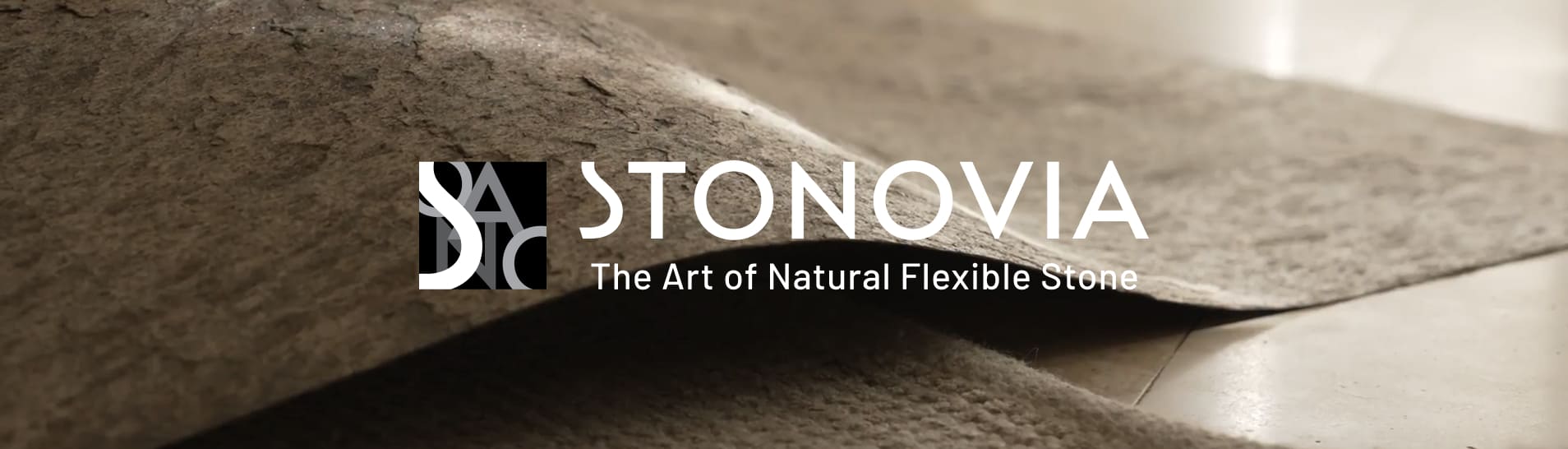
Flexible stone veneer is genuine natural stone, sliced thin enough and reinforced strong enough to bend, wrap, and install in places a traditional stone slab never could. Here's exactly what it is, how it's made, and what to know before you build it into a design.
It Starts With a Real Block of Stone
Flexible stone veneer isn't a printed panel or a synthetic look-alike. It begins the same way any natural stone product does: with a solid block, usually slate, quartzite, or marble, selected for its color, texture, and structural quality.
From there, instead of being sawn into a thick slab the way a countertop or floor tile would be, an incredibly thin layer — often just a fraction of an inch — is separated from the surface of the block. That layer carries the stone's true color, grain, and natural markings, because it is the stone. Nothing about the look is manufactured or simulated.
On its own, a layer that thin would be far too delicate to handle, let alone install. So it's bonded to a reinforced backing, typically built from resin and a fiberglass mesh, that gives the sheet real strength while keeping it thin and pliable. That combination — authentic stone surface, engineered flexible backing — is what makes the finished product something you can roll, curve, and mount in ways solid stone simply can't manage.
Why Flexibility Actually Solves a Problem
It's easy to treat "flexible" as a marketing buzzword, but it addresses a genuine limitation of natural stone. Solid slabs are heavy, rigid, and expensive to move and install. Try wrapping one around a curved wall or a rounded column, and you're stuck cutting it into small angled pieces, losing the continuous look stone is prized for in the first place.
Because flexible veneer is thin and reinforced rather than thick and solid, it can follow curves and contours that would be off-limits to a slab. It's also dramatically lighter, which means easier handling on-site, lower shipping costs, and far less structural stress on the wall it's mounted to.
For architects and designers working with anything other than a flat surface, that flexibility opens up options that traditional stone simply doesn't offer.
Where It Belongs — and Where It Doesn't
Flexible stone veneer is built for decorative, non-load-bearing surfaces in both indoor and outdoor applications: interior and exterior feature walls, columns, curved architectural elements, backsplashes, bathroom walls, and fireplace surrounds. These are places where the priority is visual impact, and the surface isn't subject to constant physical stress.
For bathroom, fireplace surround, and exterior applications, proper surface preparation, adhesive selection, sealing, and installation methods should be appropriate for the specific environment.
It's generally not intended for flooring or countertops. Floors take ongoing foot traffic and abrasion, and countertops face daily cutting, heat, and moisture — demands the thin veneer layer isn't designed to hold up against over time. If your project involves either of those, a solid slab or a material built specifically for that use is the smarter choice. Reserve the veneer for where its thinness and flexibility genuinely pay off.
Marble vs. Slate and Quartzite: Not Quite the Same
Not all flexible stone veneer is produced the same way, and it's worth knowing why. Slate and quartzite have a naturally rougher, more porous surface, which bonds relatively easily with the resin used in production. Marble is denser and smoother, so it needs an extra mechanical step — shot blasting — to create enough surface texture for a strong bond. That step also has to be repeated before every new layer is peeled from the block, which makes marble veneer more time- and labor-intensive to produce than slate or quartzite.
What that means for you as a buyer: marble veneer typically carries a premium reflecting that extra production effort, while slate and quartzite tend to be more accessible entry points into flexible stone. Neither is "better" outright — it comes down to the look you want and the budget you're working with.
Every Sheet Is Genuinely One of a Kind
Because each sheet is peeled from an actual, unrepeatable piece of stone, expect some natural variation from sheet to sheet — differences in color, veining, and texture. That's not an inconsistency to worry about; it's the same variation you'd find in any authentic stone product, and it's exactly what gives an installation its organic, non-repeating character instead of the uniform look of a printed surface.
If you're covering a large area, it's worth requesting sheets from the same production batch and reviewing a physical sample in person, since natural stone color can shift noticeably depending on lighting and screen calibration.
How It Stacks Up Against the Alternatives
- Vs. solid stone slabs: Lighter, thinner, and capable of wrapping curves a slab can't — but not built for high-wear or load-bearing use.
- Vs. printed or synthetic stone-look panels: The texture, depth, and variation are real because the material is real stone, not a photographic or textured imitation.
- Vs. traditional tiled stone installation: A continuous flexible sheet delivers a cleaner look across walls and curves, without bulky grout lines.
What to Think Through Before You Order
- Match the surface to the material. Confirm the project is a wall, curved feature, backsplash, bathroom wall, fireplace surround, or decorative exterior surface — not a floor or countertop.
- See a sample first. Physical samples reveal true color and texture more accurately than a screen.
- Order from one batch for large areas. This keeps natural variation feeling intentional.
- Loop in your installer early. Proper surface preparation and adhesive selection determine the quality of the finished installation.
Is Flexible Stone Veneer Right for Your Project?
Flexible stone veneer gives you a way to use genuine natural stone in places where a traditional slab may be too heavy, rigid, or difficult to install, including curved surfaces, large feature walls, bathroom walls, fireplace surrounds, and exterior decorative applications.
It isn't meant to replace traditional stone in every situation. But when flexibility, lower weight, and easier installation matter, it offers a practical way to bring the natural texture and character of real stone into a wider range of spaces.
Explore Flexible Stone Veneer
See genuine stone finishes, compare collections and find the right material for your project.